Sustainable projects. Real regional impact.

We identify, structure, and finance sustainable tourism and impact investment projects in emerging regions. Partnering with local organizations for measurable social and environmental results.

Contact us to explore partnership opportunities.
Thank you for your message. We’ll be in touch.
Submission error. Please try again.
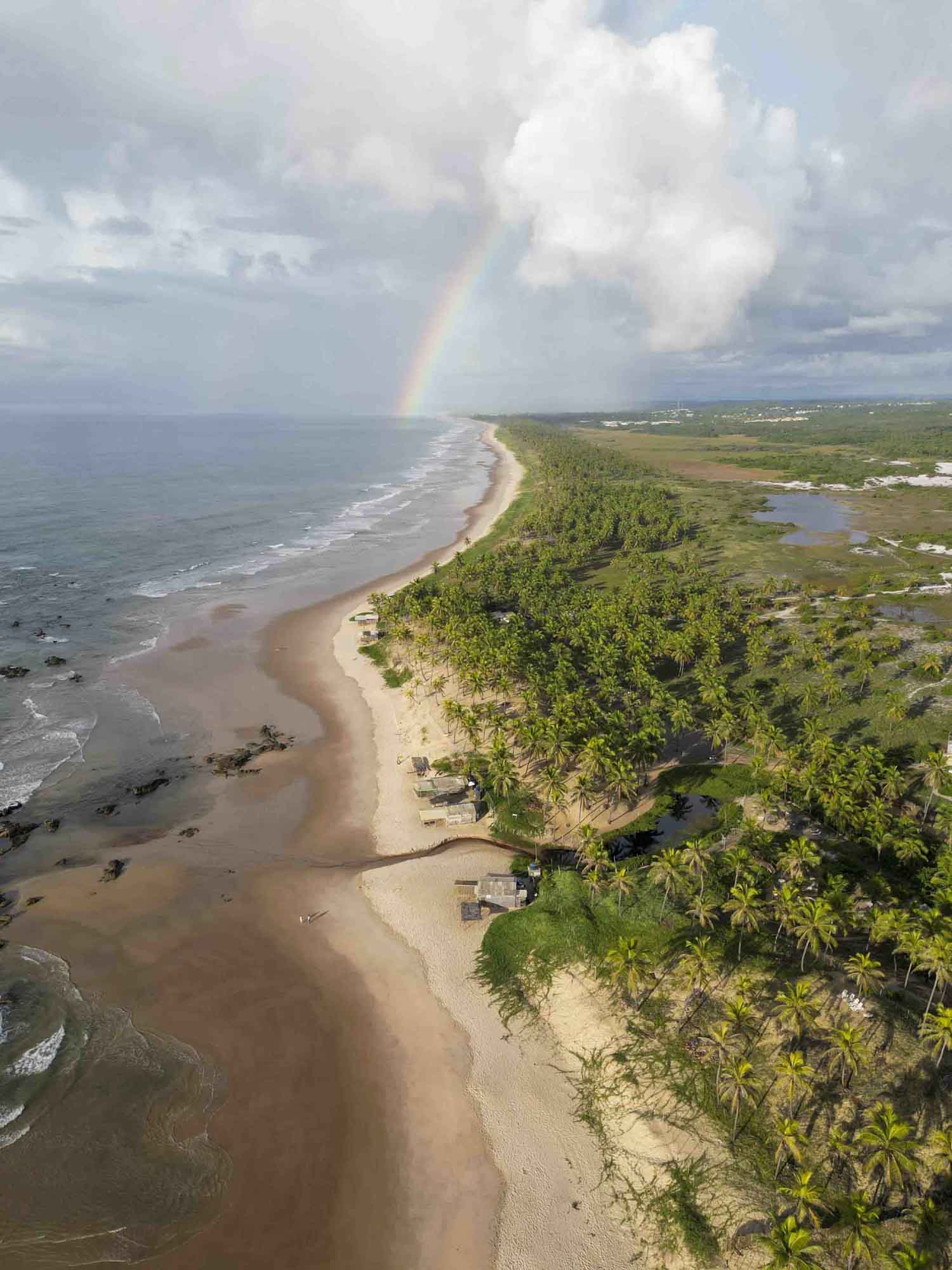
image santo antonio bahia landscape brazil

FEATURED STORY

The Amazon Expedition: A Journey of Transformation

An in-depth look at how local partnerships and sustainable development are reshaping remote river communities.

Article main opening photo 1
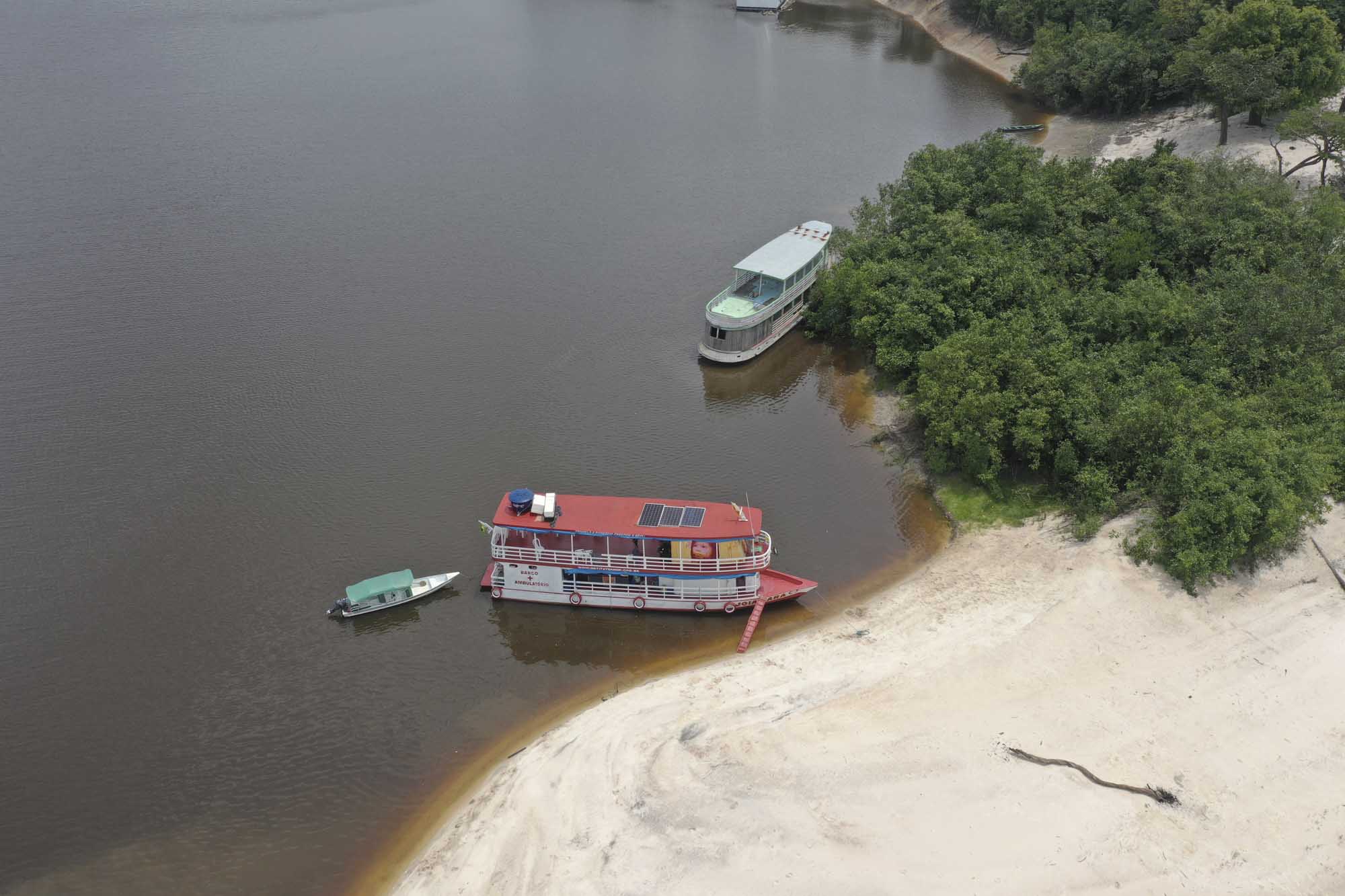
Deep in the Brazilian Amazon, along the black waters of the Negro River, distance is not measured in kilometers but in what it takes to cross them. For the indigenous and riverside communities scattered across this region, the nearest hospital, the nearest voice, the nearest help can be days away — if it's reachable at all. It's here that Impulse 4 Development has built one of its most enduring partnerships, working alongside a local NGO to close that distance, one project at a time.

A Partner in the Rainforest

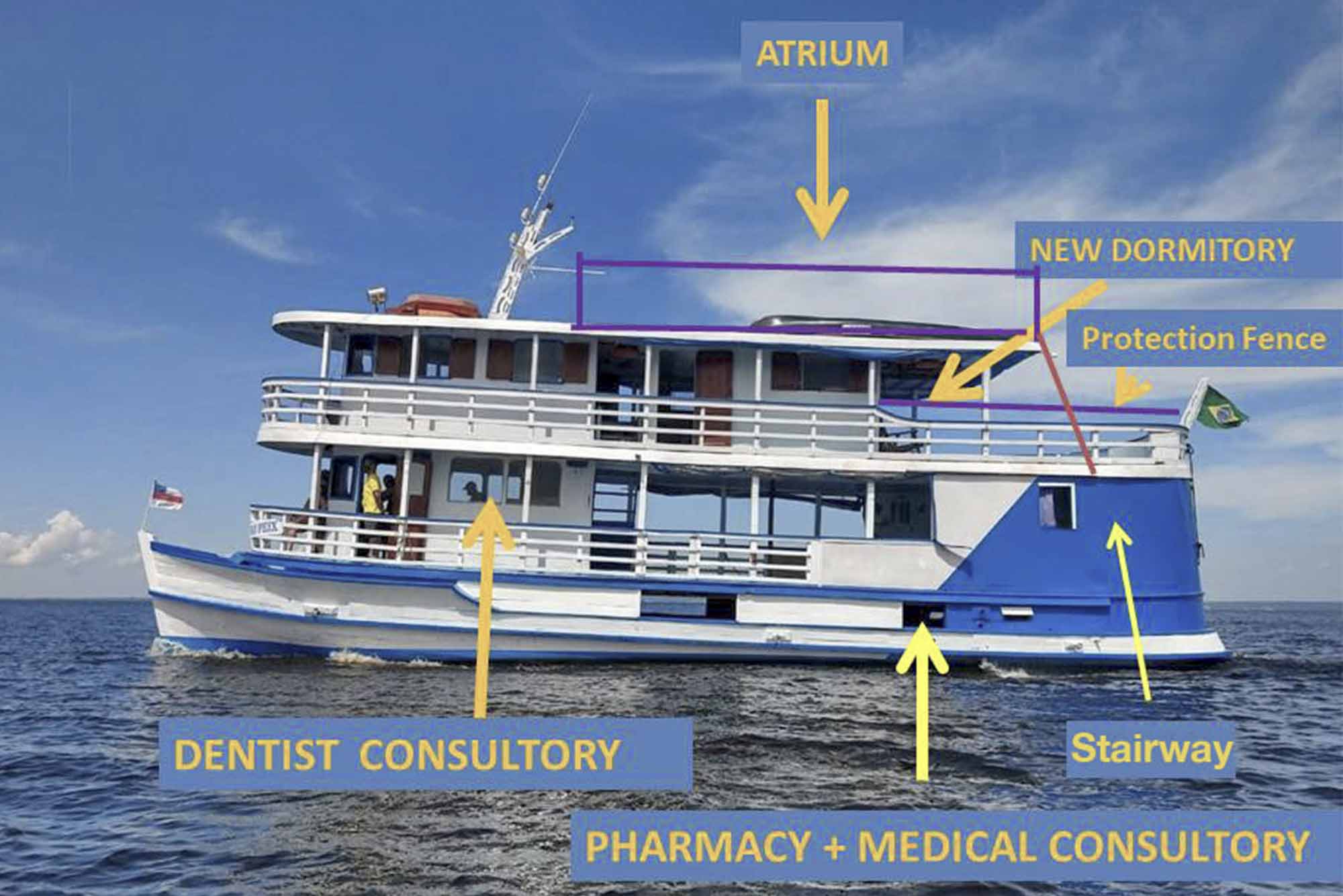
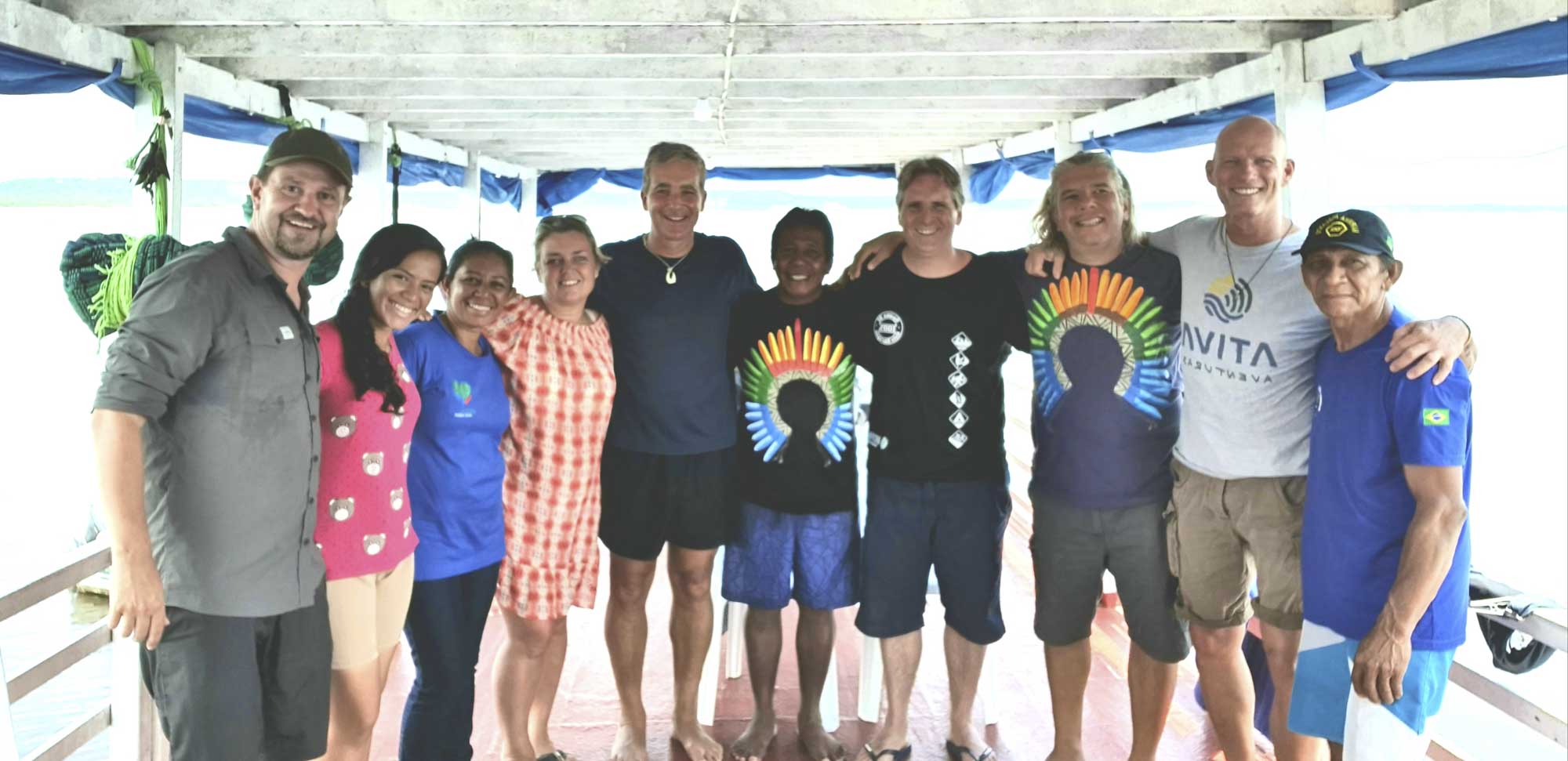
That partner is Instituto Amor — a non-profit, self-sustaining, and independent organization formed by a group of volunteers determined to improve health, education and livelihoods in communities suffering from extreme social vulnerability. Their method is simple but demanding: regular boat expeditions across the Negro River, bringing free medical and dental care directly to people who would otherwise go without it. Alongside preventive care and complex procedures, the Institute produces and donates its own herbal and allopathic medicines, rooted in indigenous ancestral knowledge.
Story inline photo

ON THE GROUND

Radio station to remote indigenous village

In October 2019, Impulse 4 Development traveled to the Amazon to visit its local partner. Sitting down with representatives from several indigenous communities, a pattern emerged in the conversations: in an emergency, there was often no way to call for help. No way to reach medical personnel. No way to reach the next community over.

Impulse 4 Development organized the funding to install a radio station, giving communities a direct line to medical support and to each other. It was a small piece of infrastructure with an outsized effect — turning isolated emergencies into situations where help was, for the first time, only a signal away.
On the ground story photo

THE FUTURE

When the Only Road Is a River

Communication solved one half of the problem. The other half was getting there.
In the Amazon, there are no roads to remote villages — only rivers, and the boats that navigate them. For the doctors and dental staff who accompanied Instituto Amor's expeditions, the boat wasn't just transport; it was the entire supply chain of medical care.So when that expedition boat broke down beyond repair during the 2020 pandemic, the consequences were immediate. With no way to travel the river, medical access to remote communities stopped — at the worst possible moment. Impulse 4 Development stepped in with impact investment capital to replace it. Within a few weeks, a new boat was on the water, and the expeditions — and the care they carried — could continue.
Community project photo

Two Investments, One Purpose


A radio and a boat: modest by most standards, transformative in the Amazon. Together, they represent what Impulse 4 Development's partnership with Instituto Amor is really about — not grand infrastructure, but the specific, practical tools that let isolated communities reach medical care, education and each other. It's a partnership that continues today, expedition by expedition, along the same river where it began.

Field report in Focus

Discover our featured projects driving ecological preservation, healthcare access & sustainable economic growth.

PETAR - Alto Ribeira State & Tourist Park

Located roughly 320 km south of São Paulo, PETAR (Parque Estadual Turístico do Alto Ribeira) is a state-protected rainforest reserve in São Paulo state, Brazil, known for its cave systems and for a body of applied research that has turned this stretch of Atlantic Forest into a documented case study in standing-forest value.

Image of PETAR - Alto ribeira state and tourist park


In 2023, Impulse 4 Development's team visited PETAR to explore the region's model for combining biodiversity research, regulated tourism and community-based guiding. The visit centred on time with Professor Cassius V. Stevani, Associate Professor at the Chemistry Institute of the University of São Paulo, whose work on bioluminescent fungi has previously been featured by National Geographic.

Since 2002, Stevani's team has described roughly a quarter of the world's known bioluminescent fungus species — about 25 of the 150 documented worldwide — most of them from the forests around PETAR. His lab holds live cultures of 15 new species and has mapped the four genes behind the bioluminescent reaction.

In 2018 the team also described two new species of bioluminescent fly larvae, the first record of their kind in South America, and opened a second research line sequencing bacteria, archaea and algae in the park's water — work that has already produced antibiotic-resistance genes and genes for biodegradable polymers.

Genes isolated from PETAR's fungi have already been licensed for biotechnology applications, including engineered bioluminescent plants now heading to market. The visit illustrated a structure Impulse 4 Development pays attention to in tourism and conservation sites: a protected biome producing publishable science and patentable biotechnology, and a research programme that trains the local guides who lead paying visitors into the forest.

Several guides at Planeta Trilha, the licensed local operator, were trained directly by Stevani's team — including Tom Cardoso, who guided our visit through the park's forest and cave systems. Access to the caves and key trails is quota-controlled and requires a licensed guide, converting visitor demand directly into local income rather than open, unmanaged use.

Why this matters: PETAR answers a question every conservation-linked investment eventually has to answer — what is standing forest worth if it isn't cleared? Here the answer is documented and specific: a quarter of the world's known bioluminescent fungi, a genetic pipeline feeding biotechnology applications, and a regulated tourism economy that pays local guides to protect the resource visitors come to see. For funders and destination partners, the case isn't aspirational — it's already operating.

Cocoa Farms in Bahia

Located in northeastern Brazil, the state of Bahia is known for its cultural history, Atlantic coastline, and remnants of the Atlantic Forest biome — one of the world’s most biodiverse and threatened ecosystems. In southern Bahia, cocoa cultivation has long been integrated into the forest landscape through traditional agroforestry systems known as cabruca, where cacao trees grow beneath a native forest canopy.
image of cocoa farm in bahia brazil


During our visit to organic cocoa farms in the region we saw the full production process — from cultivation and harvesting to fermentation and drying. The work focused on capturing both the agricultural practices and the surrounding forest ecosystem, highlighting how cocoa production can coexist with biodiversity when managed responsibly.The first farm that we visited was Fazenda Provisão, a 200-year-old working farm where organic cocoa is cultivated within the Atlantic Forest landscape. There we saw now just the production process but also the historical and cultural context of cocoa farming in the region — offering insight into how land use, heritage, and sustainable agriculture intersect.We also visited an organic cacao farm where our local guide Osvaldo was practicing permaculture. He was a very inspiring person to listen to with alot of knowledge about farming, nature and the cacao.

Santo Antônio -
a destination development fieldtrip


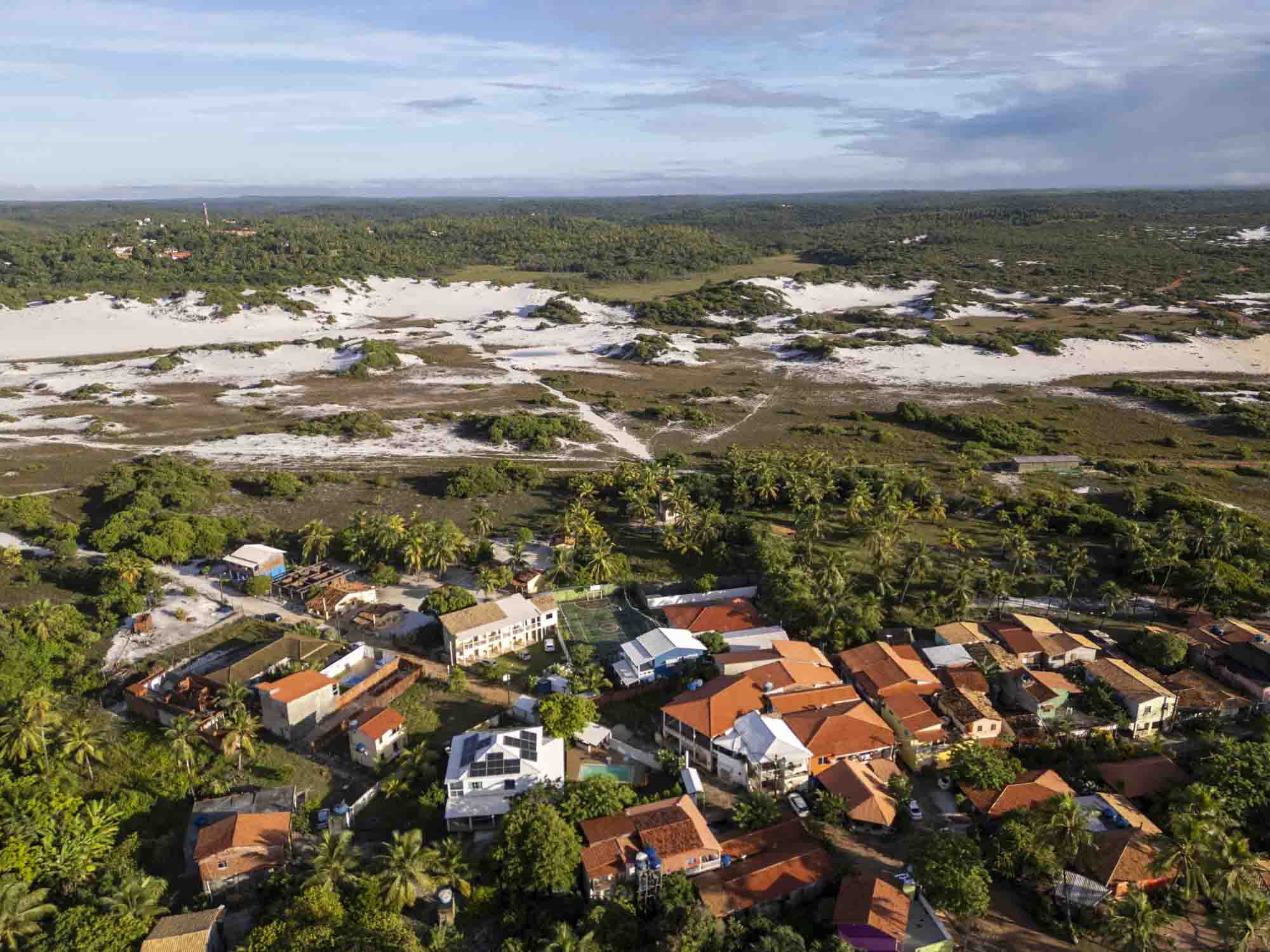
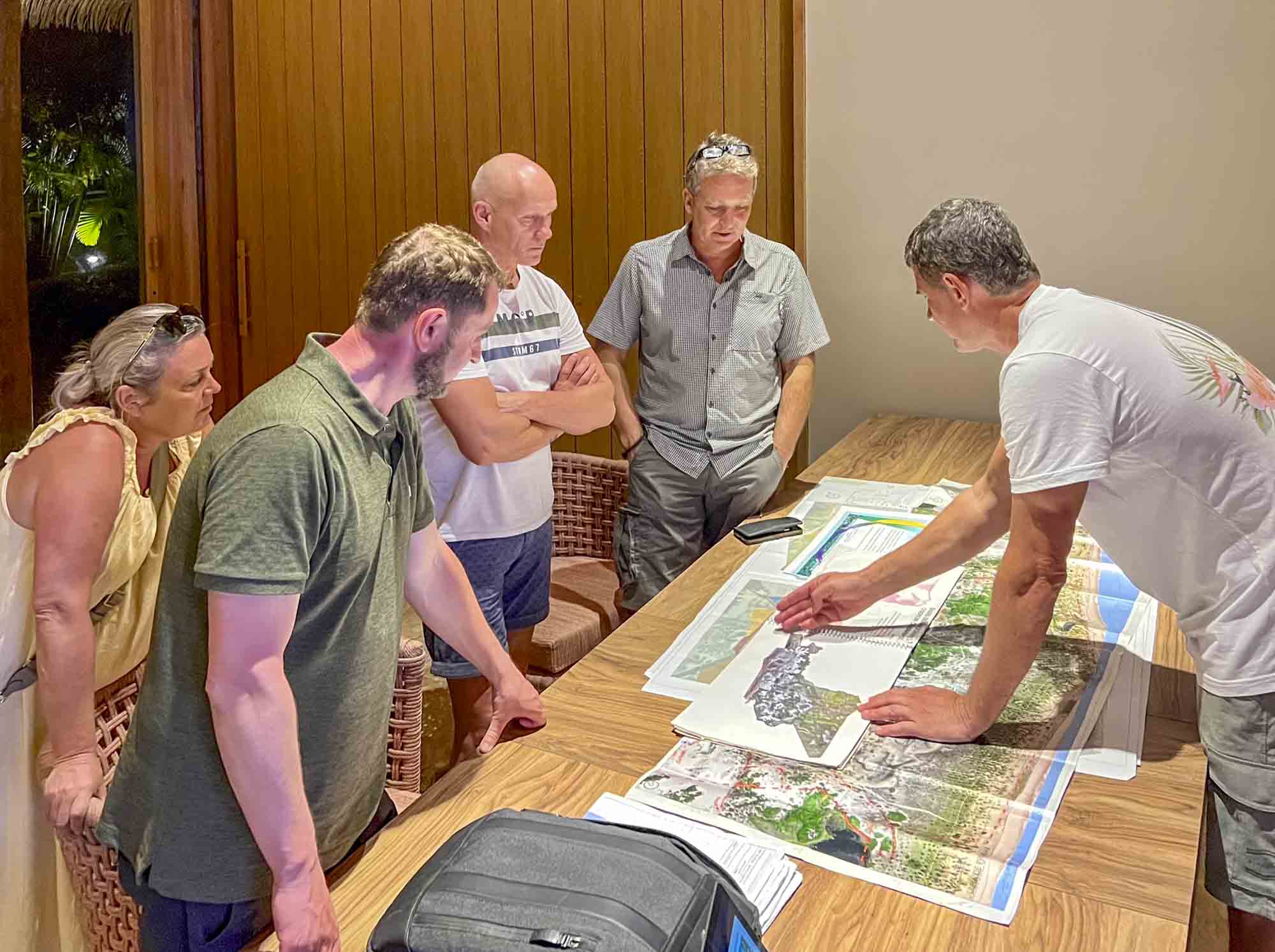
Santo Antônio is a small fishing village in the district of Diogo, municipality of Mata de São João, on Bahia's Costa dos Coqueiros — the stretch of coast running north from Salvador that also includes Praia do Forte and Imbassaí. Around 200 people live in the village. Its houses sit along sand streets a short walk from the beach, with no paved road running through the centre.In 2023 we met Luciano Mandelli, an entrepreneur based in the Praia do Forte area, and travelled with him to Santo Antônio to look at whether a joint destination-development project was possible there.Following the visit, we put forward a first proposal to Luciano covering three parallel workstreams: a destination master concept for Santo Antônio, built around a defined set of impact-investment goals (specific UN SDGs, a ten-year development plan, a review of required projects, and a pre-feasibility financial analysis) aimed at attracting the first impact-investment capital into the region; a first joint project to begin alongside that concept work; and a program to bring European travellers to Santo Antônio.


image of santo antonio bahiaimage of meeting image of panoramic view in santo antonio bahia ocean and beach

Measurable results, real-world change

Every project tracked for tangible outcomes

69%

of travelers are now actively seeking sustainable travel options; nearly 60% have already chosen one in the past two years.

Verified impact for each initiative

40%

of travelers say they're willing to pay more for a sustainably-run hotel or stay

Long-term benefits for local communities

landscape amazon rainforest

Connect with our project team

Reach out for project partnerships or investment. Fill out the form and our team will respond directly.

Thank you. We will contact you soon.
image of customer service area for a trucking company
Submission error. Please check your details.

Contact details

For direct questions or partnership requests, use the details below or submit the form.

  • hubert.sarnandt@impulse4dev.org